Discussions about the Book of Mormon often blur the distinction between what the text actually says and what later readers have assumed. Over nearly two centuries, traditions have developed that many now regard as established doctrine, even though the Book of Mormon itself is either silent or more nuanced on these questions.
This article examines three common assumptions:
- That Lehi’s family were the only people in the Americas.
- That literacy was widespread among ordinary Nephites.
- That Joseph Smith revealed the precise geography of the Book of Mormon.
Rather than relying on tradition, we will examine the internal evidence of the Book of Mormon alongside the historical record.
Myth 1: The Book of Mormon Teaches That Lehi’s Family Were Alone
One of the most widespread assumptions is that Lehi’s family arrived in an empty hemisphere and became the ancestors of everyone described in the Book of Mormon.
Surprisingly, the text never says this.
Nowhere does the Book of Mormon explicitly state that no one else inhabited the promised land. It records that Lehi’s family was led to a promised land, but it never declares that they were the first inhabitants or the only inhabitants.
More importantly, the narrative itself repeatedly assumes a level of social complexity that is difficult to explain from a single extended family.
Jacob’s Sermon
Perhaps the clearest example appears in Jacob 2.
Only a few generations after Lehi’s arrival, Jacob condemns the people for several societal sins:
- the pursuit of riches
- social inequality
- pride
- costly apparel
- polygamy among influential men
- exploitation of the poor
These are not merely individual moral failings.
They presuppose an established economy capable of producing wealth disparities, luxury goods, specialized crafts, trade networks, and social classes.
“Costly apparel” is particularly interesting.
Luxury clothing requires far more than a few families weaving garments at home. It assumes textile production, specialized artisans, access to valuable raw materials, systems of exchange, and enough economic surplus for luxury consumption. Such conditions are characteristic of developed societies rather than recently established frontier settlements.
Likewise, Jacob rebukes men who seek wealth and social status while neglecting the poor. Such inequality generally develops only after sustained economic growth and complex social organization.
Population Growth
The demographic picture raises additional questions.
By the time of King Benjamin, the Nephites possess:
- multiple cities
- organized armies
- hereditary kingship
- taxation and labor systems
- temples
- large public assemblies
- merchants
- craftsmen
- judges
- extensive agriculture
Later, the text describes wars involving tens of thousands—and eventually hundreds of thousands—of combatants.
The Book of Mormon never explains how these enormous populations developed from Lehi’s relatively small family in such a comparatively short period.
This does not prove the existence of other peoples.
However, it demonstrates that the text itself infers a level of complexity that can’t be fully reconciled with the population dynamics.
Myth 2: Most Nephites Could Read and Write
Modern readers often assume literacy was widespread.
The Book of Mormon paints a different picture.
Writing consistently appears as the responsibility of specially trained individuals. Nephi emphasizes that he had been taught “in all the learning of my father. Jacob receives the small plates because of his sacred calling. King Benjamin specifically educates his sons so they can preserve the language and records. Alma entrusts the plates only to carefully selected successors. Mormon spends decades compiling centuries of historical records. Moroni alone preserves and finishes the record.
The plates themselves are never described as public documents available for ordinary citizens to consult. Instead, they function as sacred archives preserved by a succession of designated custodians. This pattern closely resembles literacy in the ancient Near East and ancient Mesoamerica.
Both civilizations possessed writing systems, but literacy remained largely restricted to:
- priests
- scribes
- nobles
- government officials
- temple administrators
Writing required years of education and access to expensive materials. The Book of Mormon also consistently portrays teaching as oral rather than literary. King Benjamin gathers the people physically to hear his address. Alma travels city to city preaching. Amulek preaches publicly. Samuel the Lamanite delivers his warning from a city wall because the people would not receive him. If literacy had been widespread among ordinary citizens, written copies of sermons might have served the same purpose.
Instead, the Book of Mormon consistently depicts a culture in which authoritative teaching was delivered orally while sacred records were preserved by a literate elite.
Myth 3: Joseph Smith Revealed Book of Mormon Geography
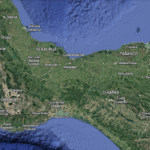
Many Latter-day Saints assume the locations of Book of Mormon events were established by revelation through Joseph Smith. The historical record does not support that conclusion. Joseph Smith certainly expressed opinions regarding Book of Mormon lands. He commented favorably on reports of ancient ruins in Central America.
The Times and Seasons newspaper, while Joseph served as editor, published articles connecting discoveries such as the ruins of Quiriguá with the Book of Mormon. Whether every editorial reflected Joseph’s own authorship remains debated, but they show that early Saints were actively exploring possible locations.
The well-known statement identifying Zelph as a righteous Lamanite encountered during Zion’s Camp likewise demonstrates that Joseph occasionally connected Book of Mormon peoples with North America. Yet the surviving accounts of the Zelph incident are secondhand, differ in important details, and never provide a comprehensive geographical model.
What is absent is just as significant as what is present.
There is no recorded revelation in the Doctrine and Covenants identifying:
- Zarahemla
- the city of Nephi
- the River Sidon
- the Narrow Neck of Land
- Bountiful
- the Land Northward
- the Land Southward
- or the final battlefield of Cumorah
Likewise, there is no canonized map accompanying the Book of Mormon. This distinction matters.
Prophets frequently express historical opinions, interpretations, or working hypotheses. Those should not automatically be elevated to the status of revelation unless they have been presented as such.
The Church itself has consistently maintained that the Book of Mormon does not identify its precise geographical setting and has never adopted an official geographical model. As a result, faithful scholars have proposed Mesoamerican, Heartland, South American, and other limited-geography models without any one of them becoming official doctrine.
The location of Book of Mormon events therefore remains an open historical question—not a settled point of revelation.
Careful reading often challenges inherited assumptions.
The Book of Mormon never states that Lehi’s family were the only inhabitants of the promised land. Its descriptions of wealth, luxury goods, social classes, organized government, and complex economies, particularly in Jacob’s sermon, are compatible with interaction within a much larger society than a single immigrant colony.
Likewise, the text portrays literacy as the responsibility of prophets, priests, kings, and official record keepers rather than the general population.
Finally, while Joseph Smith offered opinions and observations about Book of Mormon geography, no canonized revelation identifies where its events occurred. Geography remains an open field of historical investigation.
The distinction between scripture, historical evidence, and later tradition is not a threat to faith. Rather, it allows the Book of Mormon to be read on its own terms and encourages careful scholarship over inherited assumptions.